I have a longer history with rooftops than I do with romance. I had an incapacitating phobia of heights for most of my early life, instilled by the hours my older sister would lock me out on the fire escape of our sixth-floor apartment the second our parents left for work. The fearful parts of me superficially dissipated the second I stole sips then gulps then glasses of manischewitz wine at a bar mitzvah when I was thirteen. This adolescent version of myself was obsessed with applying theories to situations; constructing absolutes and conducting field tests to determine if I had discovered a new truth. I now know that nothing is certain and everything has exceptions but even through an adult approach, it was admittedly more exciting to believe in the theories untested by harsh realities. One of my beliefs was that spirits flip us upside down, reversing our constitutions in the way our eyes cast an inversion illusion with our field of vision. Conservative Christian girls would habitually take off all of their clothes at house parties, the quietest classmates would escalate into the loudest drunks, seemingly stoic statues would sob shamelessly, and I would systematically shed my acrophobia and climb everything in sight whenever a drop of liquor touched my lips: trees, ladders, spiral staircases, formerly formidable fire escapes, and even the parkway sign hanging over FDR Drive; but mainly it was roofs.
I think roofs are reserved to a specific place in the heart of any kid who’s grown up in New York City. We all have a repertoire of recollections drinking on rooftops underage and tanning with our friends and sneaking up to watch sunrises or steal sloppy kisses. With so much nihilism and noise and bustle and buildings and people and pressure at street-level, there’s nothing like climbing up to compress the intimidating infinities of the city and survey it all as sovereigns rather than subjects. My most frequently revisited reminiscences all occurred on rooftops; the time I blew out my candles after sneaking onto the roof of my high school with my closest friends to initiate sixteen, the time I threw a failed house party with a tepid keg in the bathtub because I was too poor for ice or air-conditioning so everyone but the best people left early and our survivor club drank warm beer all night before climbing up to the roof via fire escape to watch the sunrise together, the countless sleepovers I hosted on the roof of my suburban home with my best friend and the bong I made out of a honey bear bottle and how we would wake up every morning to my mom screaming at us to come back inside before we broke our necks, and the day I realized both the doors and windows to my humanities class were left unlocked so I returned with my little sister at night and we snuck out onto the Gothic revival roof of our university and shared a joint before hiding behind the conveniently thick turrets; desperately muffling each other’s giggles when campus security walked past but couldn’t ascertain the source of the smell.
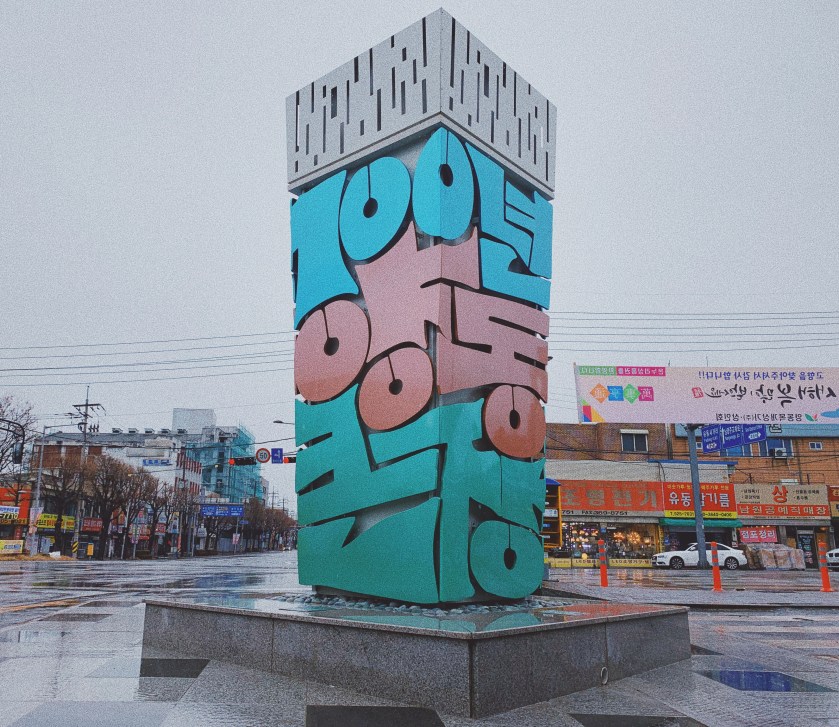
Even now, when I feel like I can’t breathe, there is a certain spot I seek where my shallow breaths swell deeper and my palpitating heart finally slows to a still. It’s not exactly a roof but it’s the closest I can get to carving out my own personal space on such unfamiliar turf. Korea is one hundredth the size of America, so the entire country is built upwards instead of out. The foundations of sprawling American shopping malls and civic centers would shake at the sight of the slender stories of their Korean equivalents, where even hospitals feel like apartments and I had to travel in between three floors during my last medical exam. I get overwhelmed by my inadequate Korean when I see skyscrapers with signs for ten to twenty businesses and I’m not sure where to begin or where to go or what it is I want or what my destination will look like when the elevator doors open because I’m unable to prefatorily peep through the glass like I can at ground-level. I doubt I’ll uncover an unlocked passageway to the rooftop of a commercial building that I can access whenever I come undone, so the turquoise bridge over the highway will have to do.
Recently, the chronic thrumming of my heart has quieted from the minute you saw me wringing my hands and told me I had nothing to be anxious about. You’ve noticed I do everything too quickly; forever in a rush, never in the moment, and always holding my breath. You drag the stillness out of me; fighting years of indoctrinated inclinations by forcing me to pace myself instead of always running and never allowing the heels of my feet to remain rooted to the ground. I compared the second boy who broke my heart to “home” – the corner of my universe where I would sneak out of the house to smoke Marlboro Reds on my forbidden roof – but you’re not home at all. You’re impossibly foreign and hard to read, you’re all the rooftops I’m too rattled to reach while I settle for a low-lying overpass bridge.
Since I met you, I hardly recognize myself. I have to bite my lip to keep from grinning when I walk down the street and I dance to Green Day while I wait for the traffic lights to change. I spend hours analyzing the texts you send me, trying to discern the slightest semblance of interest beneath your professional veneer and overthinking the intention behind every casual interaction. Has your life changed the way mine has after we met? Was that song about me? Did you wear that cologne specifically for me to notice? Do you wait two hours to text me back as to not seem overeager or is that just coincidence? Maybe the two hours is another theory of mine, but I’m sixteen again after liking someone for the first time in six years and I’m not sure what to do when your fingers brush against mine and I’m convinced you can hear the audible thump when my heart slips out of my sweaty hands.
I wish I could see myself through your eyes; so tongue-tied and tattooed in a place where both traits are taboo. I wish you could see yourself through mine; how exceptionally patient you are, how you untangle the intended meaning from my mess of misused words to truly hear me instead of brushing off all the things I’m trying to say. I wish you knew how it feels whenever I find you in an unfamiliar room, in an unfamiliar country, and you look up at me and smile in recognition. I wish you knew how it feels when you remind me to stay anchored and I’m unable to tell you that you’re the one who keeps me tethered to this place instead of drifting in the opposite direction. I wish you knew the way it feels when I run out and clamber up the steps to the overpass and breathe in, big and deep, at the top of the bright blue bridge until my temptation to turn into a tornado trifles away and I’m left at the eye of an abandoned storm; reminded once more that I’m just human.
There’s a reverberation that resonates in my bones as herds of cars zoom past underfoot, a tell-tale sign that I’m only capable of feeling grounded when exceedingly elevated. There’s an anxiety that comes hand-in-hand with feeling this alive; an exhilaration that’s solely granted by climbing to a place where I am reduced to trembling. I’m fearful of falling, of losing my footing, but a part of me feels punch-drunk and empowered in full view of you; a feeling fortified by every admonition you provide whenever you’re fed up with the way I enter a room with my head hung low and a heart full of fear. Maybe one day I’ll get drunk enough to climb all the way up the highway sign like I used to; finally seeing you eye-to-eye at such great heights instead of settling for pedestrian bridges, but for now I feel like I’m gazing up at you from a distance that feels impossible to span and it’s simpler to resign myself to peering through dirty glass at street-level.
I forgot how it feels to like someone; how irrepressibly giddy and intoxicated you feel despite your best efforts to fill in the cracks of your blooming heart with concrete. I forgot how all-encompassing it is; how you can’t sleep or think straight, how it’s the only thing that’s ever on your mind. I forgot how full of teen angst you become; the stuttering, the overthinking, the theorizing, the assuming, and all the potential possibilities playing out like a fifties film in your mind late at night. I’m consumed with how much I want to see your face, how much I want to know what you might like in a woman, how much I want to know if you’re thinking of me too. Do you feel like you’ll never stop reliving the second your eyes met mine? Do you smile the way I do when you text me? Do you put as much thought into perfecting your casual responses? Do you construct a list of things you want to tell me the day before we’re meant to meet?
Anytime I like someone this much, it’s never ended well because my infatuation drowns out my partner’s reciprocal interest in overwhelming tidal waves. I’m no longer sixteen. In fact, I’m nearly twice the age of who I was when I relied on alcohol to feel brave and my heart to dictate my actions. I’ll relegate myself to remaining a distant poet, an internet cowboy, recording these confessions for the sole sake of my sanity and never uttering an unprofessional word to you; ensuring this part of me goes undiscovered because I can no longer attribute my impulsiveness to adolescence.
All I want is to climb high enough to see the city beneath me instead of feeling so small, but I refuse to ascend to the point of melting my carefully-constructed wings and plummeting into the depths of an unsympathetic sea.

 noted things